
|
|||||
|---|---|---|---|---|---|
|
|||||
|
|
|||||
|---|---|---|---|---|---|
|
|
|||||
Popular Articles: |
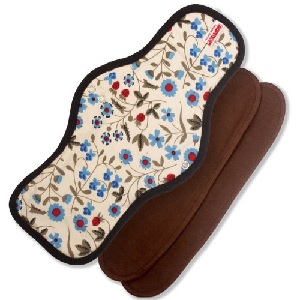
Sckoon Organic Menstrual Pads |
• U.S. women landfill or incinerate 11.3 billion disposable
menstrual products per year.
• It takes approximately 500 years for one disposable
menstrual pad to partially biodegrade.
• Disposable
menstrual product manufacturers are not required to list their ingredients.
Nail polish and shampoo manufacturers are.
• Slim maxi
paper products are impregnated with synthetic gelling crystals to increase absorbency. Their safety has been hotly debated in baby diapers but overlooked in disposable
menstrual products.
• Women are absent in upper management of Fortune 500 companies that manufacture disposable
menstrual products.
• An individual woman throws away about ten thousand paper pads or tampons in her lifetime.
• The primary target markets of Fortune 500 companies are adolescent girls and underdeveloped countries like Eastern Europe, Soviet Union and the Pacific Rim.

Sea Pearls Sea Sponge Tampons |
• In the U.S., menstrual pads are considered medical devices
.
• Disposable
menstrual products are not sterilized.
• Chlorine bleaching of paper pulp results in 400-700 million pounds of toxins being dumped into U.S. waterways.
• Dioxins, the side-effect of chlorine bleaching, are suspected carcinogens and resistant to biological breakdown.
• Dioxins have been documented to impair liver function and depress human immune systems.
• The ozone is thinned by the CFC's that are produced in the manufacturing processes that utilize chlorine - plastics, paints, dyes, bleaching agents, cleaning solvents, aerosols, deodorants, refrigerants, and wood preservatives.

Reusable Menstrual Cups |
• Chlorine was the noxious substance used to suffocate soldiers during the First World War.
• French nurses experimented with the first disposable
menstrual products from cellulose surgical gauze during the First World War.
• Trout store dioxins up to 86,000 times more than the water they find themselves in.
We eat these fish!
• Humans are harbouring increasing levels of dioxin in their fatty tissues and breast milk.
(Ed. notes: Formula also has high dioxin levels, so this is not a reason not to breastfeed)
• An estimated two million seabirds and one hundred thousand marine mammals die annually from swallowing plastics including tampon applicators.
• Call the 1-800 number on disposable
menstrual products and all white paper products and insist on products that have not been bleached at any stage of production with any chlorine.
• BUY CLOTH AND/OR SEA-SILK SPONGES AND REUSE!
Sources: Whitewash, Greenpeace
This article compliments of Born to Love.
Whitewash
Stop the Whitewash
Send questions, comments, and suggestions to: catherine@borntolove.com
Born to Love articles are written by Catherine McDiarmid-Watt
Born to Love is a participant in the Amazon Services LLC Associates Program, an affiliate advertising program designed to provide a means for sites to earn advertising fees.
NOTE: All logos, company names, brands, images, trademarks and other intellectual property are the property of their respective owners.
Born to Love is a participant in the eBay Partner Network, an affiliate advertising program designed to provide a means for sites to earn advertising fees by advertising and linking to eBay.com.
Copyright © 1978 - BorntoLove.com - All Rights Reserved.
Last updated - April 5, 2024


